

In affiliate marketing, accurate tracking is essential for understanding campaign performance, improving return on investment (ROI), and scaling profitable traffic sources. Whether you are promoting online casinos, sports betting offers, e-commerce products, or lead-generation campaigns, you need to know which clicks turn into conversions and how much revenue those conversions generate.
A postback tracking system helps solve this challenge by sending conversion information directly between servers. Instead of relying entirely on browser cookies or tracking pixels, server-to-server (S2S) postback tracking allows affiliate marketers to connect conversions with the original clicks that generated them.
But what is the best postback tracking software for affiliate marketing? Three leading options worth considering are Voluum, RedTrack, and Binom. Each offers conversion tracking and campaign analytics, but they differ in their features, workflows, and suitability for different types of marketers.
In this guide, we explain how postback tracking works, its main benefits, and why Voluum is our top overall recommendation.
A postback tracking system records a conversion and communicates that information between an affiliate network, advertiser, or conversion platform and a tracking tool.
For example, imagine you run a paid advertising campaign promoting an online casino. A visitor clicks your advertisement, lands on your review page, and then clicks an affiliate link to visit the casino.
If the visitor subsequently registers or makes a qualifying deposit, the casino’s affiliate platform can send a server-to-server postback to your tracking software. The postback includes a unique click identifier that helps match the conversion to the original visit.
Depending on the integration, the postback may also contain information such as the conversion type, payout, currency, and transaction identifier.
This makes it possible to see which campaigns, advertisements, landing pages, devices, and traffic sources generate results.
A typical postback tracking process follows these steps:
The result is a more complete picture of campaign performance. You can compare advertising costs with recorded payouts and make decisions based on data rather than assumptions.
Importantly, postback tracking does not automatically fix every attribution problem. Correct click-ID passing, compatible integrations, appropriate attribution settings, and accurate conversion definitions are still necessary.
One of the biggest advantages of server-to-server tracking is that conversion information is exchanged directly between platforms rather than depending entirely on a visitor’s browser.
Browser restrictions, cookie limitations, and ad blockers can interfere with some client-side tracking methods. A correctly configured postback can reduce reliance on those methods and provide a more reliable way to record conversions.
For affiliate marketers who invest money in paid traffic, better conversion data is essential. If a campaign generates deposits but the tracking platform fails to record them, you could mistakenly pause a profitable campaign.
Clicks and impressions alone do not tell you whether an advertising campaign is profitable. You need conversion and revenue data to compare campaign costs with the value generated.
A postback tracking platform can help you calculate metrics such as:
For example, suppose you spend $500 on a campaign and generate $700 in attributable affiliate revenue. Your campaign produces $200 before other operating costs, and your ROAS is 140%.
With accurate conversion tracking, you can compare this campaign with other traffic sources and determine where additional budget may be justified. Keep in mind that affiliate revenue can be delayed, adjusted, or reversed, so reported revenue should be reconciled with the affiliate platform.
Postback tracking helps media buyers identify which traffic sources and placements generate meaningful results.
A campaign may generate thousands of inexpensive clicks without producing a single valuable conversion. Another campaign may deliver fewer clicks but produce more registrations or deposits.
When your tracker records conversions against the original campaign data, you can evaluate performance by placement, device, geography, landing page, creative, or other available parameters.
This is particularly useful for native advertising, push notifications, pop traffic, display advertising, and other paid acquisition channels. You can use the data to test different campaign settings, pause underperforming placements, and allocate more budget to campaigns that demonstrate sustainable profitability.
Affiliate marketing often involves multiple steps between an advertisement and a commission. Visitors may click an ad, read a review, compare offers, register with an advertiser, and only later complete a qualifying action.
A tracking system can help connect these stages when the necessary identifiers and events are available.
For casino affiliates, this can be especially valuable because a registration does not necessarily generate the same revenue as a first-time deposit. Depending on the affiliate agreement, you may also need to distinguish between approved deposits, qualified players, revenue-share earnings, and subsequent player activity.
Tracking the right conversion events gives you a better understanding of traffic quality instead of treating every click or registration as equally valuable.
Successful media buying depends on testing. Advertisers need to compare creatives, landing pages, offers, and targeting strategies to determine what works.
A postback tracking system provides the measurement infrastructure for these tests. Without reliable conversion data, it is difficult to tell whether a change improved campaign performance or simply generated more clicks.
Once a campaign has enough reliable data, you can make more informed decisions about scaling. However, a few conversions do not guarantee that a campaign will remain profitable at a larger budget. Continue monitoring acquisition costs, conversion quality, and the stability of results as spending increases.
Some trackers can forward conversion information to supported advertising platforms through server-to-server postbacks or APIs. This can help those platforms receive signals about the actions that matter to your business.
Depending on the integration, these signals may support campaign optimization and conversion reporting. The benefit depends on the platform, the data being sent, the attribution setup, and applicable privacy requirements.
A tracker should therefore be evaluated not only by its ability to record conversions internally, but also by its ability to integrate with the advertising networks and affiliate platforms you actually use.
Several tracking tools support postback tracking, but the best choice depends on your budget, technical requirements, traffic sources, and campaign complexity. Our top overall recommendation is Voluum, followed by RedTrack and Binom.
Voluum is a performance marketing tracker designed to help affiliates and media buyers measure, analyze, and optimize campaigns across traffic sources. It supports server-to-server postback conversion tracking and offers campaign reporting, automation, and traffic optimization features.
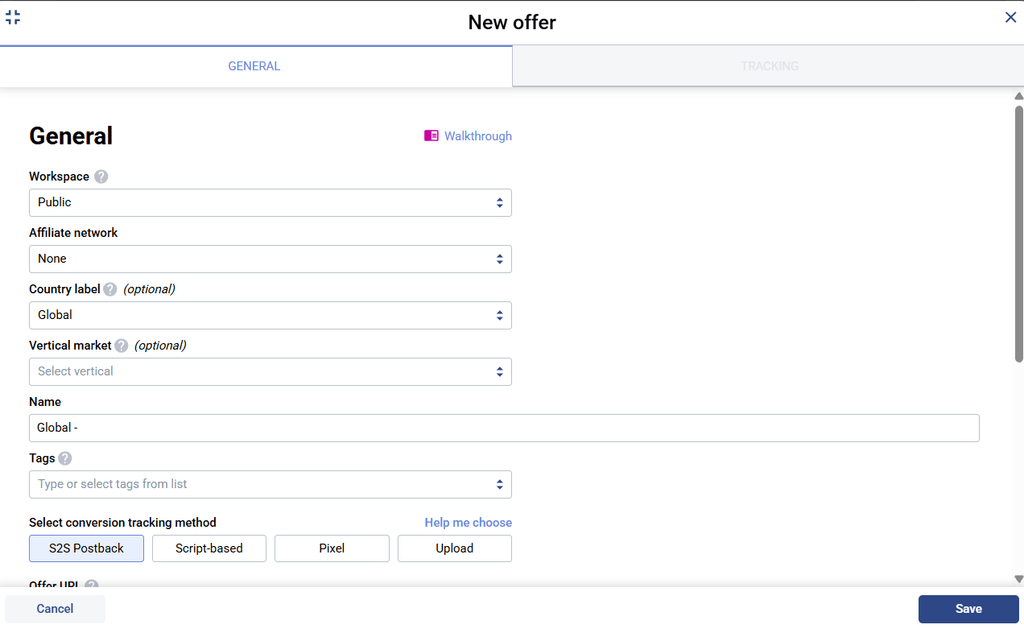
Key features
Main advantages
Voluum’s biggest advantage is the combination of conversion tracking, analytics, and optimization tools in one platform. Instead of using a tracker simply to count clicks and conversions, media buyers can use it to evaluate performance and manage campaign decisions.
Its reporting capabilities are useful when running multiple offers, traffic sources, or landing pages. Its postback support also helps affiliate marketers connect recorded conversions with the clicks that originally generated them.
For casino and sports betting affiliates, Voluum can be useful when comparing campaigns across different offers and traffic channels. For example, a media buyer can track the journey from an advertisement to a casino review page and then to an affiliate offer, provided the required tracking parameters are passed correctly.
Who should choose Voluum?
Voluum is our top overall recommendation for affiliates and media buyers who want a comprehensive tracking platform with campaign analytics and optimization capabilities. It is particularly worth considering for marketers running multiple paid traffic campaigns who need more than basic click tracking.
Before subscribing, check the current plan limits, included events, integrations, and any overage charges to ensure the platform fits your traffic volume and budget.
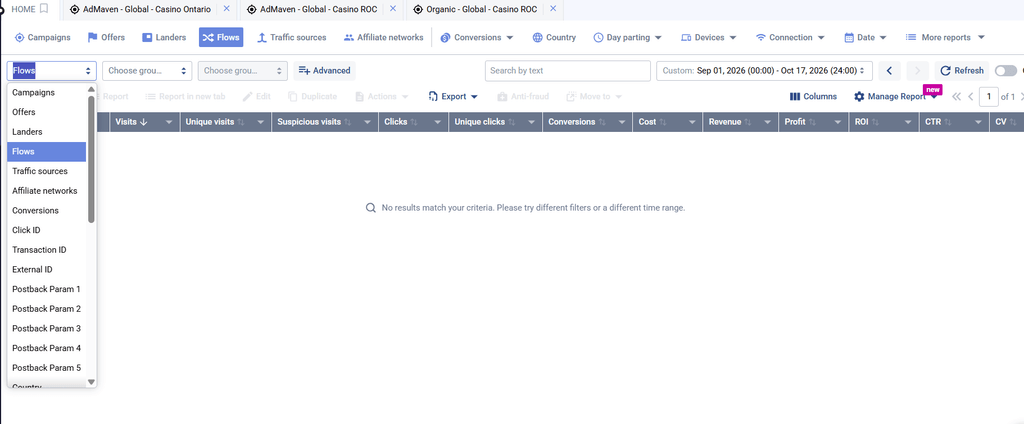
RedTrack is another performance marketing tracking platform that combines attribution, conversion tracking, reporting, and data-sharing capabilities.
It supports server-side tracking and postbacks, alongside other conversion-tracking methods. It also offers features designed to help marketers manage conversion data across multiple channels.
Key features
Main advantages
RedTrack stands out for its flexible data-sharing and tracking-protection features. Its postback security options can help restrict which sources are permitted to submit conversion events, while deduplication features help reduce the risk of counting the same conversion more than once.
Its integration and data-distribution capabilities can also be attractive to marketers who need to send conversion signals to different platforms. This is particularly useful when the advertising platform’s own reporting does not provide a complete view of performance.
RedTrack can be a strong alternative to Voluum for affiliates and agencies that want campaign tracking combined with conversion-data distribution and detailed reporting.
Who should choose RedTrack?
Consider RedTrack if your workflow relies heavily on connecting several advertising platforms, tracking systems, and conversion sources. Compare its current integrations, event limits, and pricing with Voluum before making a decision.
Binom is a tracking platform aimed at affiliate marketers and media buyers who need detailed click-level data and control over their tracking setup.
It supports postback tracking, conversion statuses, payout reporting, and options for passing conversion information back to traffic sources.
Key features
Main advantages
Binom is worth considering for marketers who want granular tracking information and control over their campaign setup. Its click-level parameters can help users investigate traffic quality and compare campaign performance across available dimensions.
Its postback functionality allows conversion information to be associated with the original click. It also supports conversion statuses and cost updates, which can be helpful when an affiliate network reports more than one stage of a conversion.
Depending on the deployment and pricing model, Binom may appeal to technically confident marketers who prefer more control over their tracking environment. Evaluate the hosting, maintenance, support, and setup requirements alongside the software’s capabilities.
Who should choose Binom?
Binom may suit experienced affiliate marketers and media buyers who prioritize granular click tracking and flexibility. It is a credible alternative to Voluum and RedTrack, particularly for users comfortable evaluating and managing the technical side of their tracking setup.
| Feature | Voluum | RedTrack | Binom |
| S2S postback tracking | Yes | Yes | Yes |
| Campaign analytics | Strong reporting suite | Strong reporting suite | Detailed click and campaign data |
| Conversion tracking | Postbacks and supported pixels | Postbacks, APIs, scripts and pixels | Postbacks and conversion pixels |
| Conversion data sharing | Supported integrations | Strong data-distribution options | Supported traffic-source integrations |
| Conversion statuses | Custom conversion capabilities | Custom conversion options | Conversion status support |
| Automation and optimization | Advanced optimization tools | Automation and rule-based tools | Focus on tracking and campaign controls |
| Best suited for | Overall campaign tracking and optimization | Flexible integrations and conversion distribution | Granular tracking and technical control |
Feature availability varies by plan, integration, and configuration. Check each provider’s current documentation and pricing before choosing a platform.
Before committing to a tracking platform, consider these five factors.
1. Compatibility with your affiliate networks. Confirm that your affiliate network or advertiser supports S2S postbacks and can pass the click identifier required by your tracker.
2. Traffic-source integrations. Make sure the platform can capture cost data and work with your chosen advertising networks. Some integrations may require additional setup.
3. Reporting requirements. Decide whether you need basic conversion reporting or more advanced breakdowns by placement, creative, device, geography, and offer.
4. Budget and event limits. Compare subscription costs, event quotas, overage fees, hosting expenses, and the level of support included.
5. Technical setup and troubleshooting. A powerful tracker is only useful when it is configured correctly. Check that click IDs, conversion events, payout values, and attribution settings work as expected before launching a significant campaign.
Even the best tracking software cannot compensate for a broken integration. Follow these practices to improve tracking reliability:
For casino affiliates, it is also important to ensure that the advertising source, landing page, tracking setup, and promoted offer comply with the relevant market’s rules and the advertiser’s terms.
Important Tip: As with any new platform you’re using, it’s important to get support. With Voluum, our experience was excellent as we received several weeks of support which was very appreciated. The initial steps of creating campaigns and getting brands to add postbacks and connecting them on Voluum can be intimidating and confusing. For that reason, we strongly recommend that before choosing a platform, find out if their team can offer you a high level of support via email/whatsapp and on a call that will give you the guidance you need to get set up.
A reliable postback tracking system is an important part of any serious affiliate marketing operation. It helps connect clicks with conversions, measure campaign profitability, improve traffic optimization, and identify which campaigns deserve further testing.
Voluum is our top overall choice because it combines server-to-server postback tracking with campaign analytics and optimization features. RedTrack is a strong alternative for marketers who value flexible integrations, conversion-data distribution, and postback protection. Binom is another credible option for experienced media buyers who want granular tracking and control over their setup.
The best platform is ultimately the one that integrates reliably with your affiliate networks and traffic sources, fits your budget, and provides data you can use to make better decisions.
Whichever tracker you choose, test the complete postback flow before scaling your advertising budget. Accurate tracking is not just a technical feature: it is the foundation for understanding campaign performance and building a more sustainable affiliate marketing business.